

A Sunday reset in a small apartment works best when it makes Monday easier without taking over your weekend. Start with the surface you need next, give loose belongings a home, and prepare one useful thing for tomorrow. You do not need new storage, a matching set of containers, or a room that looks untouched.
These small apartment Sunday reset ideas focus on four compact zones: your landing spot, kitchen work surface, laundry route, and next-day essentials. Choose the zone causing the most friction first. Stop when the space works better for you.
1. Make a landing spot without adding furniture
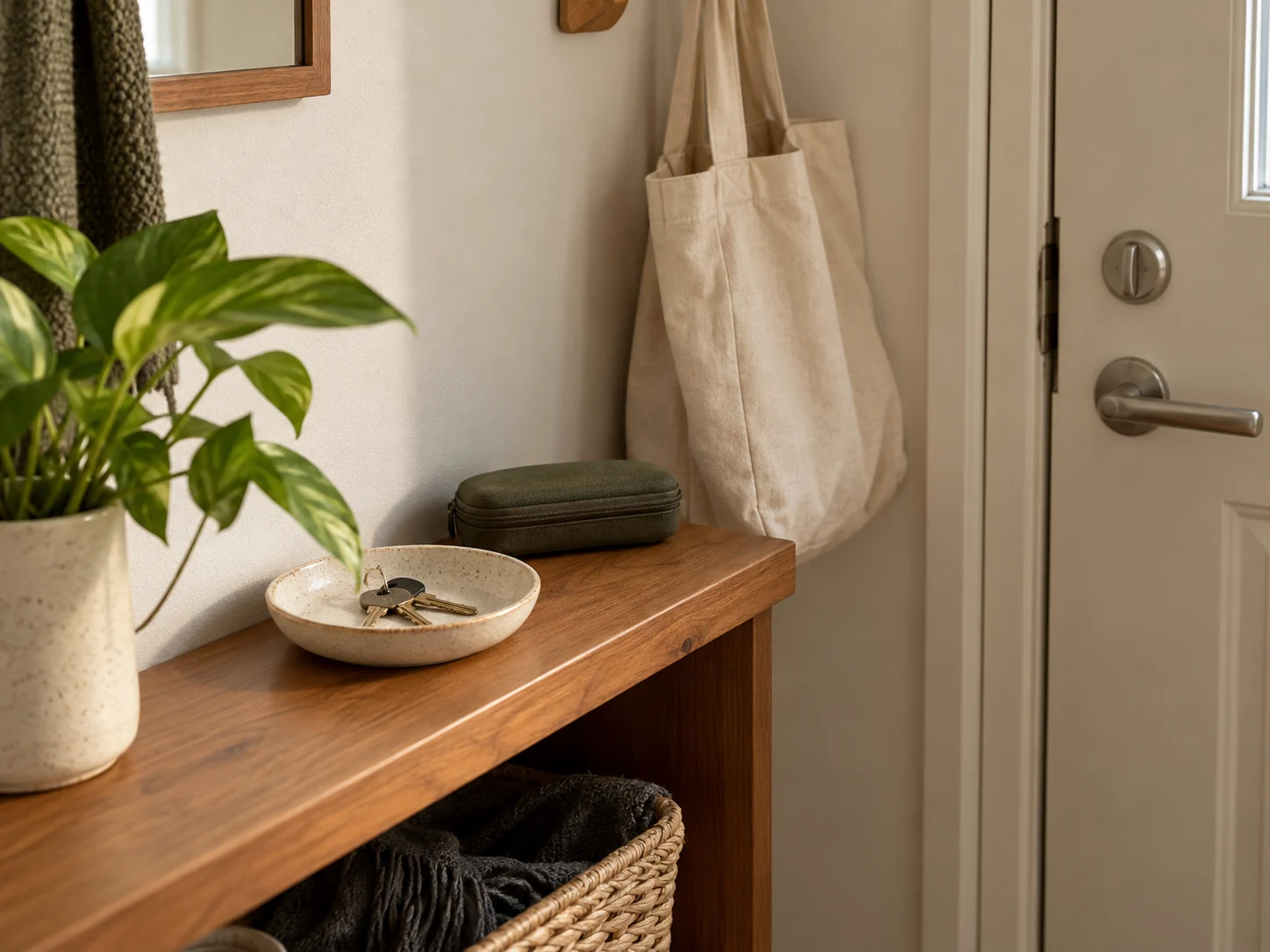
If keys, headphones, and receipts keep migrating across the apartment, choose one place where you naturally arrive or leave. A dish on an existing shelf or a small section of a side table may be enough. Keep the spot reachable for the people using it, and avoid creating an obstacle beside the door. The aim is a predictable handoff between outside and home, not another surface to decorate.
Put only daily essentials there. Give mail a separate action pile, return unrelated objects to their actual homes, and leave enough room to set something down. If you are still finding places for everything after a move, start with this practical zone before arranging a whole room; our first apartment keys captions can help you describe that imperfect, lived-in beginning without pretending the unpacking is finished.
- Choose a landing spot on furniture you already own.
- Move keys and the next day’s essentials there.
- Remove one item that belongs somewhere else.
- For an Instagram photo, frame the small working arrangement rather than exposing addresses, identification, or keys in close detail.
2. Reclaim enough counter space for your next meal
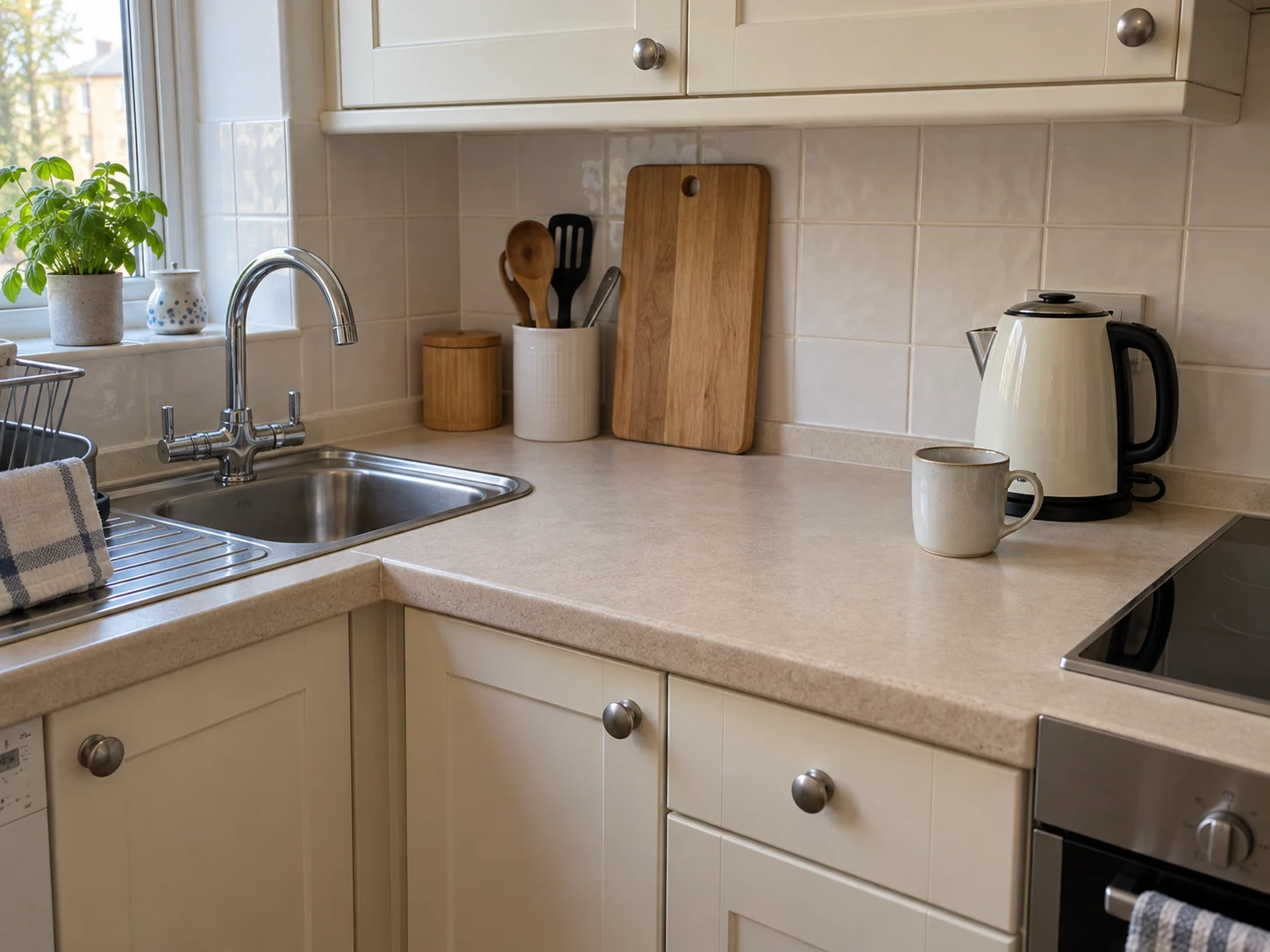
Pick the part of the kitchen you will actually use first tomorrow: the space beside your kettle, a preparation corner, or the sink area. Return clean dishes to their homes and put away items that do not belong in the kitchen. You can leave another task unfinished and still create a useful breakfast station. In a tiny kitchen, one clear working area often matters more than making every visible object disappear.
Clean that surface with a product suitable for its material and follow the label. Never mix bleach or disinfectants with other cleaning products; the CDC’s guidance on cleaning with bleach explains specific precautions when that product is appropriate. For the photo afterward, use the actual finished corner: a clear preparation space and a mug are enough, without buying props or staging a meal you will not eat.
- Clear a usable preparation area rather than every counter at once.
- Put everyday tools where you can reach them.
- Follow product instructions and keep cleaning supplies away from food.
- Show the working space in the frame, with private notes and labels out of view.
3. Finish one laundry loop before starting another
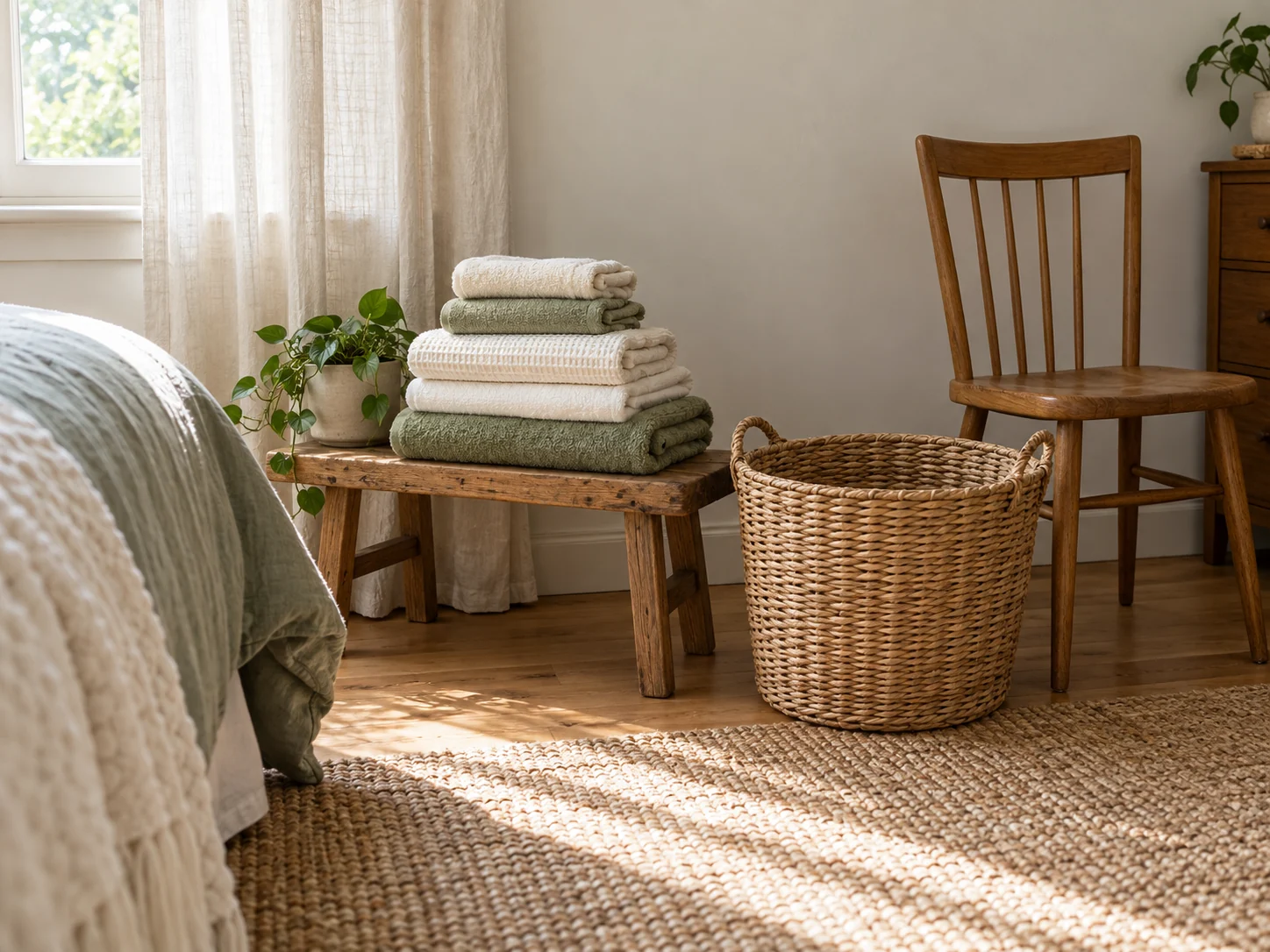
A laundry reset can mean putting away dry clothes, not running another load. Look for the step that has stalled: the clean pile on a chair, towels waiting to be folded, or clothes that have no easy place to go. Finish one manageable batch and return the basket to its ordinary location. You have made progress even if the hamper is not empty.
If you do start a load, check care labels, available drying space, and whether you can complete the remaining steps. Avoid turning a small room into an obstacle course of baskets and racks. Consider ventilation and moisture in the home rather than adding fragrance to disguise stale air; the EPA’s indoor air quality guidance describes source control and ventilation as approaches to improving indoor air. Follow local conditions and your building’s arrangements when deciding how to ventilate.
- Pick one clean batch to fold and put away.
- Return the chair, bed, or floor area to its usual purpose.
- Start another load only if you have a realistic drying and putting-away plan.
- Photograph the finished basket or folded stack without including personal garments you would rather keep private.
4. Prepare the things you will reach for first
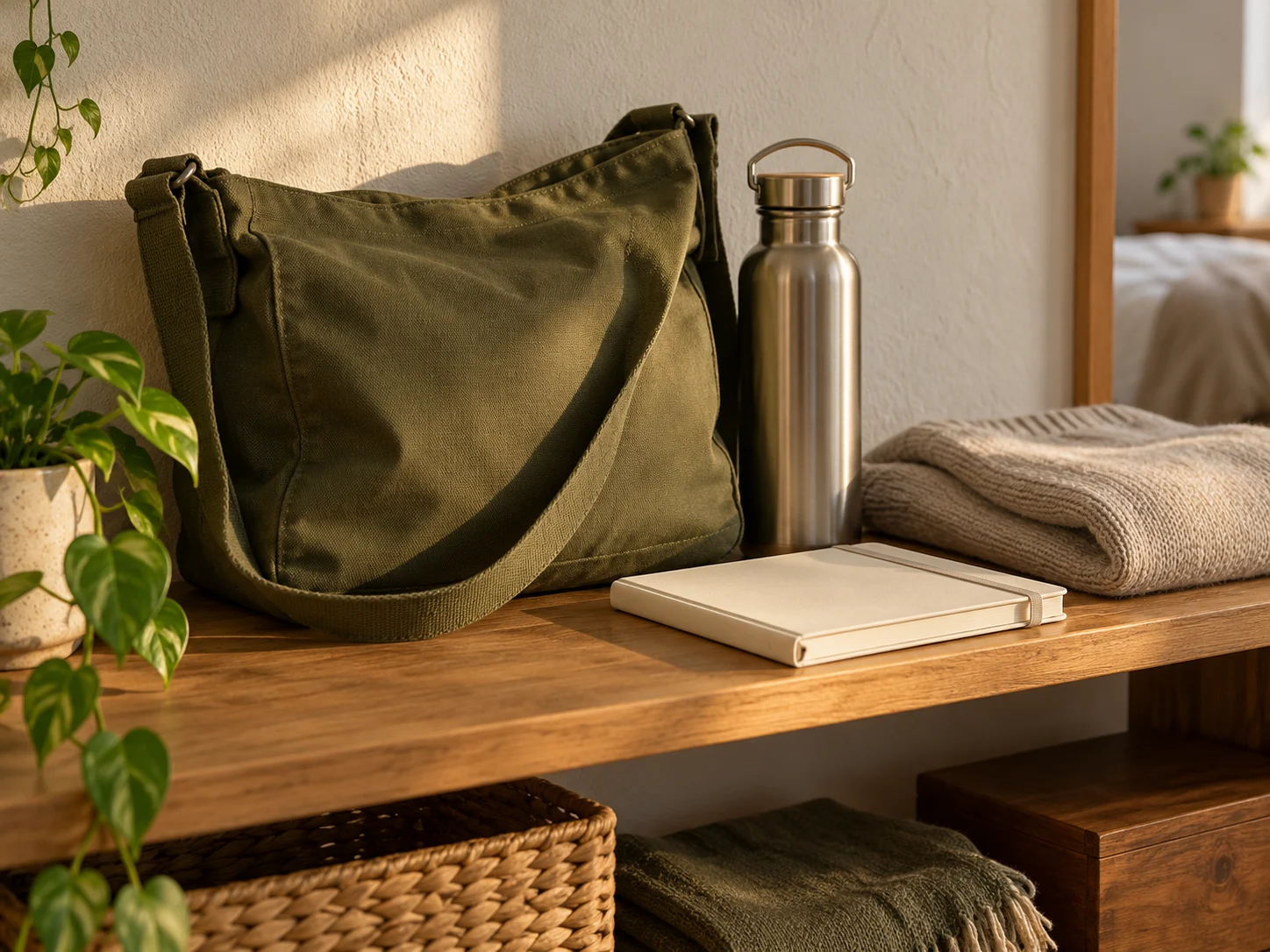
Think through the first few steps of your next morning. What will you wear, carry, eat, or need to remember? Set out an appropriate outfit, put the reusable bottle beside your bag, and write down one first task. If your schedule varies, make this a next-day station instead of assuming Monday means an office commute. A useful setup fits the person living there.
Keep the arrangement compact enough that it does not steal your dining seat or block your route through the room. Charge devices where cords will not cross a walkway, and leave private screens and work information out of any photographs. If you want a gentler image to accompany the routine, our weekend morning photo ideas at home offer a related approach to framing ordinary moments. Choose a scene that reflects what you actually use rather than assembling someone else’s routine.
- Choose the clothes or equipment needed for your actual plans.
- Put the essentials together in one usable place.
- Write a single next action on paper; do not turn it into a complete life-planning exercise.
- Take the photo before including identifying calendar entries, badges, or laptop content.
Keep the routine small enough to repeat
Try one zone if your energy or time is limited. For a longer reset, move through the four zones in the order that helps your home most, then stop. A clear counter, a returned laundry basket, or a ready bag is a concrete result. You do not need to finish all four, photograph each one, or make the apartment look ready for a viewing.
For an Instagram carousel, choose only the useful moments you want to share and keep addresses, reflections, and personal paperwork out of frame. Describe what changed plainly: a place for keys, space for breakfast, or one less pile to step around. After a week, notice which part you actually used and simplify the rest. The best version of this routine is the one that earns its place in your apartment.

Join the conversation
Comments 0
Have a thought or a tip to share? We would love to hear from you.